Sound familiar?Holland Landing
- The call
- After a wet summer the entry door sits lower in its frame. The lock works perfectly when the door is open, but with it shut you have to lift the handle and shoulder the door to get the deadbolt to throw.
The knob flops loose on its spindle and never springs back to level. When you turn it the latch pulls in, but you have to push the knob back yourself, and lately the latch has started staying inside the door instead of catching.
Where the door has moved, the lock gets blamed. Solid wood doors in older houses swell in humid weather, shrink in winter and settle on their hinges, and a mortise lock that was set decades ago ends up with its latch and bolt aiming a little below the strike. Part of every vintage lock service is reading how the door hangs, tightening or packing the hinges, and moving or filing the strike so the latch catches and the bolt throws without lifting the handle. Often that alignment work, plus a clean and new springs, is the entire repair, and the customer gets back a door that closes with one hand.
Sound familiar?Holland Landing
Vintage Mortise Lock Service · Holland Landing
Scene 1
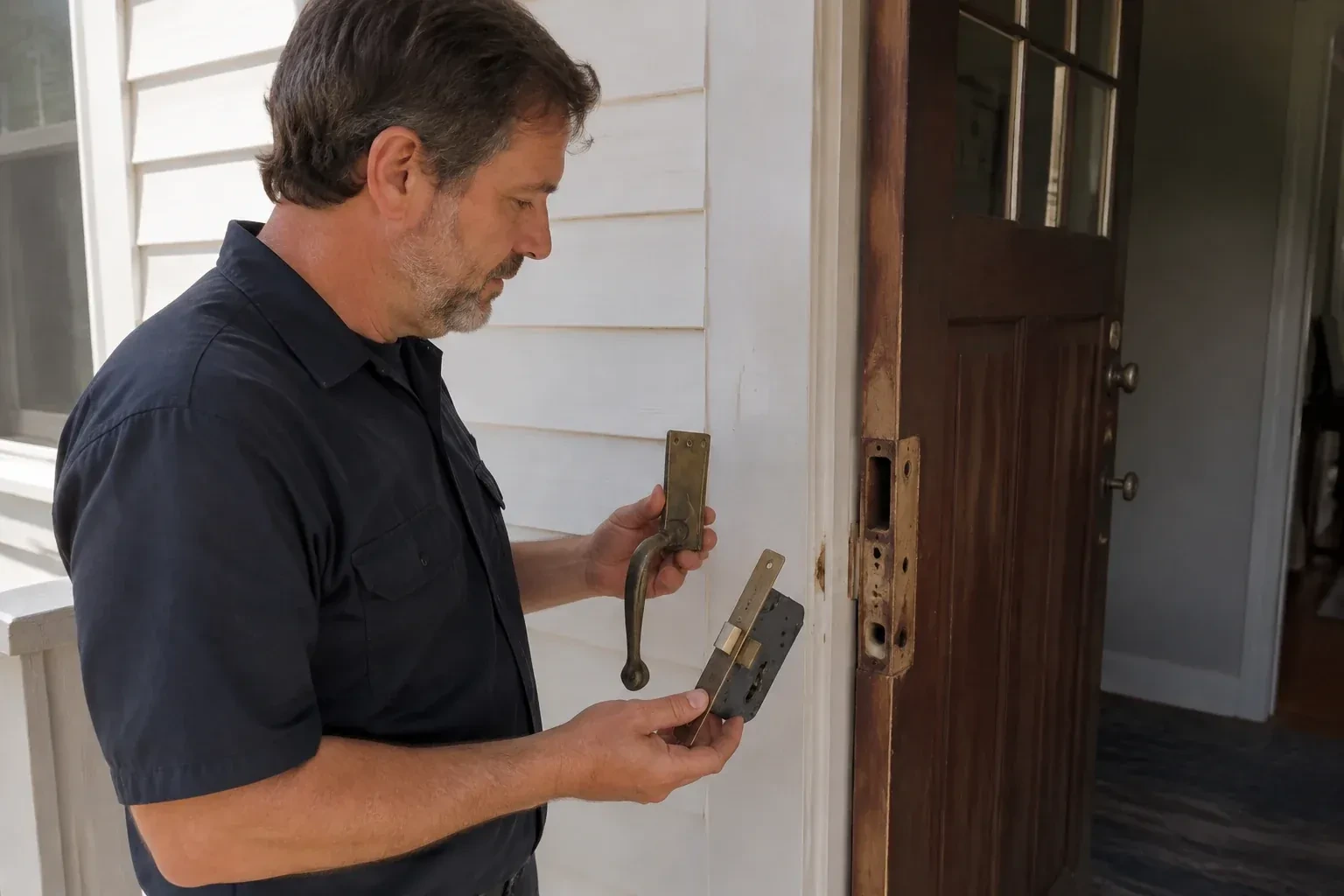
Standing at the open door, the locksmith looks at the narrow brass or steel plate in the door edge. Its height, the spacing of its screws, any maker's stamp, and whether it shows one bolt or two tell a good deal about what is inside: a latch-only case for an interior door, a latch and deadbolt case for an entry, or a privacy function with a turn button. The distance from the door edge to the centre of the knob, the backset, is measured, along with the spindle size. These figures decide which springs, followers and, if it comes to that, which replacement case will fit, so they are written down before the lock is disturbed.
Scene 2
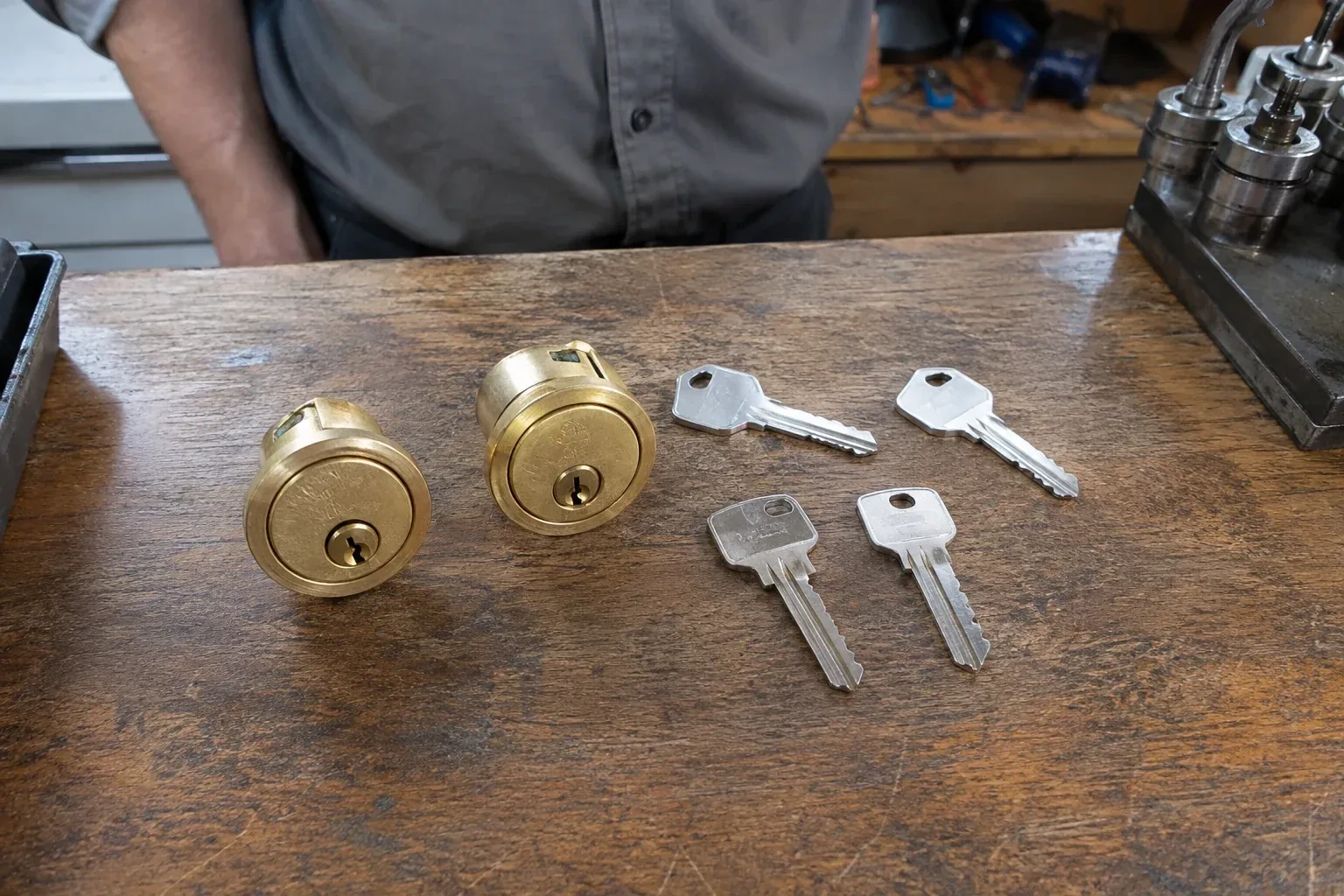
A pin-tumbler cylinder on a mortise lock is serviced the same way as a modern one. The plug is pushed out with a follower, the old bottom pins are replaced to a new combination, and keys are cut to match, so a lost key stops mattering. If the plug is worn past rekeying, a new mortise cylinder is selected with the same thread length, the same cam shape and a finish close to the trim, and threaded into the case to the correct depth so the cam swings the bolt without binding. The set screw is seated into the cylinder's groove, and the key is tested with the case in the door.
Scene 3
Anything that came out of the lock, a broken spring, a worn lever, the old cylinder, is offered to you rather than thrown away; some owners keep the originals with the house's papers. The locksmith leaves a short account of what was done: the case type and size, what was replaced, whether keys were made or a cylinder rekeyed, and how the strike was adjusted. For a designated heritage property this record shows the original hardware was retained. For everyone else it is simply the sheet you hand to the next locksmith, or the next owner, so nobody has to rediscover what is inside the door.
What shapes the quoteBrown Hill Locksmith Specialists
FeesSame any hour
Usually yes to the first, and to the second once the locksmith checks the locks. Interior mortise latches with privacy turn buttons are lighter versions of the entry lock and respond to the same clean and re-spring. Interior locks in a house were sometimes supplied to one bit key, and where the key sections, warding and levers actually match, the locksmith can restore that arrangement so a single key opens several bedroom and bathroom doors. It is a practical thing to have when a child locks a bathroom from inside.
A drop of the right lock oil into the latch and bolt once a year is plenty. If the lock has a pin-tumbler cylinder, use whatever lubricant that cylinder's maker specifies, since some take a dry graphite or PTFE product and others a specified liquid one. Try the latch and deadbolt each spring and fall; if the bolt starts to scrape, the strike wants a small adjustment before anything is strained. Keep bit keys out of a pocket where they bend.
Often, on cases that already take a threaded cylinder. Mortise cylinders are made in standard thread sizes and lengths with different cam shapes, and a new one is selected to match the case and the door thickness. That gives you keys cut on a machine and the option of keying the door alike with the rest of the house. A bit-key case has no cylinder to swap; its keys are made on the bench instead.
YorkOntario
Vintage Mortise Lock Service · East Gwillimbury, Brown Hill, Mount Albert, Queensville, River Drive Park, Sharon
Every square is one home in a hundred.
On-site assessment
The knob flops loose on its spindle and never springs back to level.
(365) 510-2010, open 24/7.
On-site assessment preferred · (365) 510-2010, open 24/7